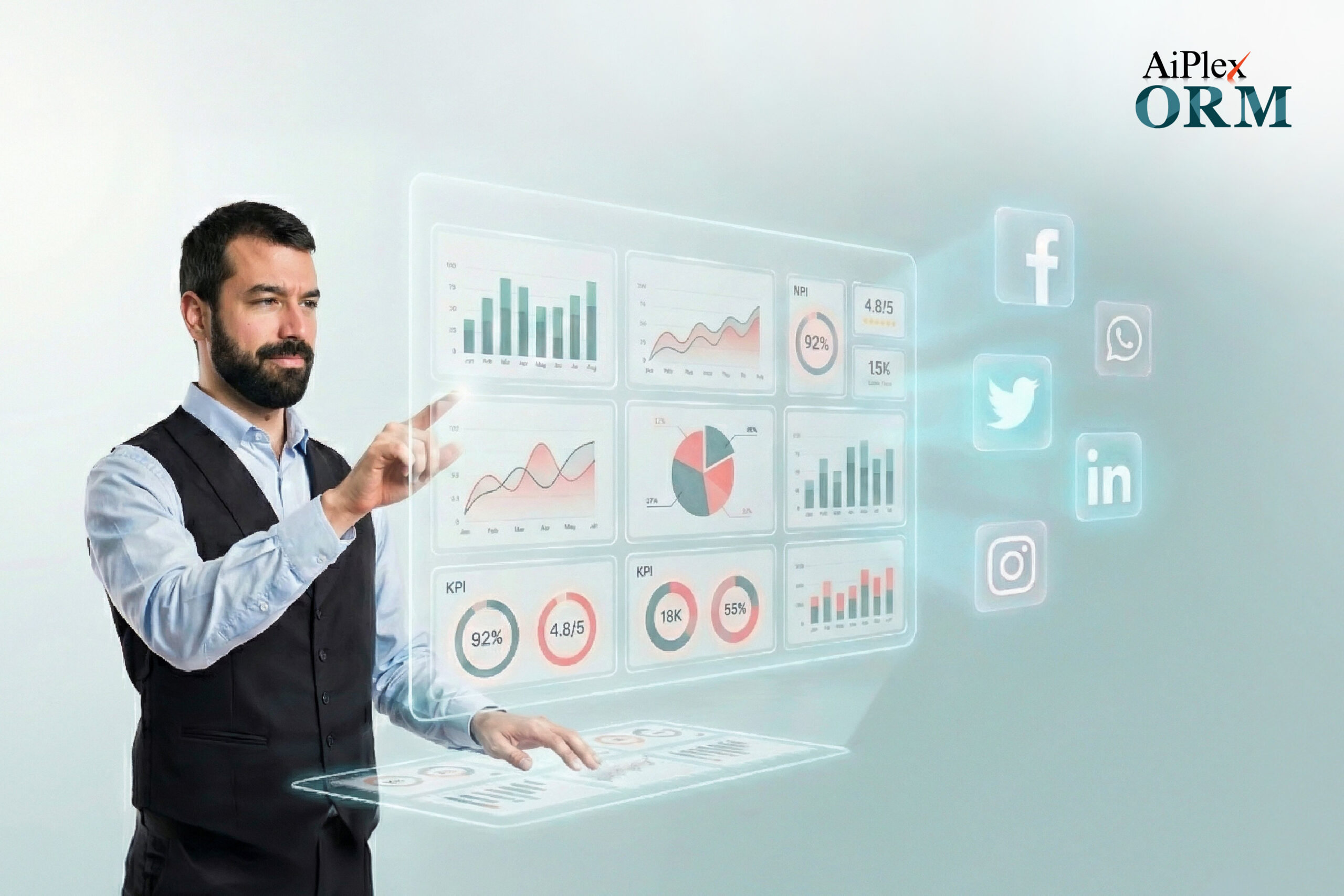
Social Media Analytics for Reputation Intelligence
Brands rarely face reputation challenges because of a single loud incident; they usually emerge from repeated signals that were never properly interpreted.
Customer comments, influencer mentions, review snippets, and community discussions collectively shape how a brand is perceived over time. When these signals remain scattered across platforms, leaders rely on instinct rather than evidence. This uncertainty often results in delayed responses or misaligned communication strategies. Social Media Analytics provides a structured way to observe these signals, allowing businesses to identify perception trends early, understand audience expectations, and track how brand narratives evolve across digital ecosystems.
This blog explains how reputation intelligence is built using social media analytics rather than assumptions or surface-level metrics. It breaks down what data truly matters, how to evaluate sentiment, and which contextual factors influence reputation outcomes. Readers will gain clarity on the foundational knowledge required before adopting analytics platforms, followed by a detailed explanation of how analytics frameworks support reputation monitoring at scale. The goal is to help organizations make informed, proactive decisions using insights rather than reactive damage control, while also understanding how advanced analytics platforms like Aiplex ORM support this process.
Key Concepts to Understand Before Using Social Media Analytics
Before diving into dashboards and metrics, it is important to understand the fundamental concepts that determine how reputation data is interpreted. Social media analytics is not only about collecting mentions but about contextualizing them correctly. Without this foundation, businesses risk misreading data or focusing on vanity metrics that offer little strategic value. This section outlines the essential concepts that shape reliable reputation intelligence.
Sentiment Analysis and Emotional Context
Sentiment analysis is the process of categorizing social conversations based on emotional tone, typically classified as positive, negative, or neutral. While this sounds simple, reputation intelligence requires deeper emotional context. A neutral comment during a crisis can still indicate dissatisfaction, while a positive mention may include subtle criticism. Understanding sentiment accurately allows brands to assess perception shifts before they escalate into larger reputation issues.
Emotional context also varies across platforms and audiences. The language used on professional networks differs significantly from casual social platforms. Advanced analytics systems account for linguistic nuance, sarcasm, and recurring emotional patterns. When sentiment analysis is applied with contextual awareness, it becomes a powerful indicator of brand trust, customer confidence, and emerging reputational risks.
Volume of Mentions and Conversation Velocity
The number of times a brand is mentioned provides insight into visibility, but reputation intelligence focuses on changes in volume rather than absolute numbers. A sudden spike in mentions often signals a trigger event that requires investigation. Tracking conversation velocity helps organizations understand how fast narratives are spreading and whether an issue is gaining momentum.
Volume metrics become more meaningful when combined with sentiment and source analysis. A rise in negative mentions from high-authority accounts carries different implications than casual comments from individual users. Understanding why volume changes occur allows businesses to distinguish between organic growth, campaign-driven engagement, and potential reputation threats.
Source Credibility and Audience Influence
Not all social mentions carry equal weight in reputation analysis. Source credibility evaluates who is speaking about the brand and how influential they are within their community. A complaint from a recognized industry expert can impact perception more significantly than multiple generic comments.
Audience influence analysis helps brands prioritize responses and allocate resources effectively. By identifying key voices shaping public perception, organizations can engage strategically rather than react broadly. This targeted approach strengthens reputation management while maintaining authenticity and relevance.
Contextual Keywords and Narrative Framing
Keywords alone do not define reputation; the context in which they appear shapes interpretation. Narrative framing analysis examines how brands are discussed alongside specific themes such as trust, pricing, innovation, or service quality. These associations reveal how audiences mentally position the brand.
Tracking contextual keywords over time allows businesses to see whether brand narratives align with intended positioning. If conversations increasingly associate a brand with negative service experiences or ethical concerns, reputation intelligence systems surface these patterns early, enabling corrective action.
Platform-Specific Behavior Patterns
Each social platform has unique behavioral norms that influence how reputation data should be interpreted. Short-form platforms encourage quick reactions, while long-form discussions provide deeper insights into sentiment reasoning. Understanding these behavioral patterns ensures accurate analysis.
Platform-specific analytics prevent misinterpretation caused by applying uniform benchmarks across channels. Reputation intelligence becomes more reliable when platform context is considered, helping brands respond appropriately without overreacting or underestimating issues.
Core Elements of Social Media Analytics for Reputation Intelligence
Once foundational concepts are clear, businesses can focus on the analytical elements that directly contribute to reputation intelligence. These elements transform raw data into structured insights that guide strategic decision-making.
Real-Time Monitoring and Alert Systems
Real-time monitoring allows organizations to track brand mentions as they happen, reducing response latency during critical moments.
Alerts notify teams when predefined thresholds are crossed, such as spikes in negative sentiment or mentions from high-influence accounts.
This proactive visibility supports reputation protection by enabling timely, informed responses. Rather than scrambling after narratives have spread, brands can intervene early, clarify misinformation, or address concerns before perception solidifies.
Trend Analysis and Longitudinal Tracking
Reputation is built over time, making trend analysis essential. Longitudinal tracking examines how sentiment, volume, and narratives evolve across weeks or months. This perspective helps organizations distinguish temporary fluctuations from systemic issues.
By analyzing trends, leadership teams gain clarity on whether strategic changes, campaigns, or policy updates are improving public perception. This evidence-based evaluation strengthens long-term reputation planning.
Competitive Benchmarking Insights
Reputation intelligence is incomplete without comparative context. Competitive benchmarking evaluates how a brand's perception compares to industry peers. This analysis highlights relative strengths, vulnerabilities, and positioning gaps.
Understanding competitive perception allows businesses to refine messaging and differentiation strategies. Rather than guessing where they stand, organizations rely on measurable insights to guide reputation-building efforts.
Audience Segmentation and Perception Mapping
Different audience segments often perceive brands differently. Audience segmentation breaks down reputation data by demographics, geography, or interest groups. This mapping reveals which segments are advocates, critics, or neutral observers.
Segmented insights enable tailored communication strategies that resonate with specific groups. Reputation intelligence becomes more actionable when brands understand who holds which perceptions and why.
Data Visualization and Insight Accessibility
Analytics insights must be accessible to decision-makers across departments. Data visualization translates complex datasets into intuitive dashboards that support quick interpretation. Clear visual narratives reduce miscommunication and improve alignment.
Accessible insights ensure that reputation intelligence informs leadership decisions, crisis planning, and strategic initiatives rather than remaining confined to analytics teams.
Why Choose Aiplex ORM for Social Media Analytics and Reputation Intelligence
Aiplex ORM provides advanced social media analytics designed to move beyond surface metrics and deliver meaningful reputation intelligence. Its platform integrates real-time monitoring, sentiment analysis, and contextual interpretation within a unified system. This approach ensures that brands gain clarity rather than fragmented data.
The platform emphasizes actionable insights, helping organizations identify emerging risks, understand narrative drivers, and track reputation performance over time. With customizable dashboards and intelligent alerting, Aiplex ORM supports proactive reputation management aligned with strategic goals. Businesses benefit from data-driven confidence, enabling informed decisions grounded in audience reality rather than assumptions.
Conclusion
Reputation intelligence is no longer a reactive discipline reserved for crisis moments. It is an ongoing strategic function that shapes trust, loyalty, and long-term brand equity. Social media analytics provides the infrastructure required to observe, interpret, and respond to public perception with precision. By understanding foundational concepts, leveraging core analytical elements, and adopting advanced platforms, organizations transform scattered conversations into strategic assets.
As digital conversations continue to influence purchasing decisions and brand credibility, investing in structured reputation intelligence becomes essential. Businesses that embrace social media analytics gain the ability to anticipate challenges, reinforce positive narratives, and build resilient brand trust.
Platforms like Aiplex ORM empower organizations to navigate this complexity with clarity, ensuring reputation management evolves from reactive defense to proactive intelligence.
Share this article
Loading latest posts...